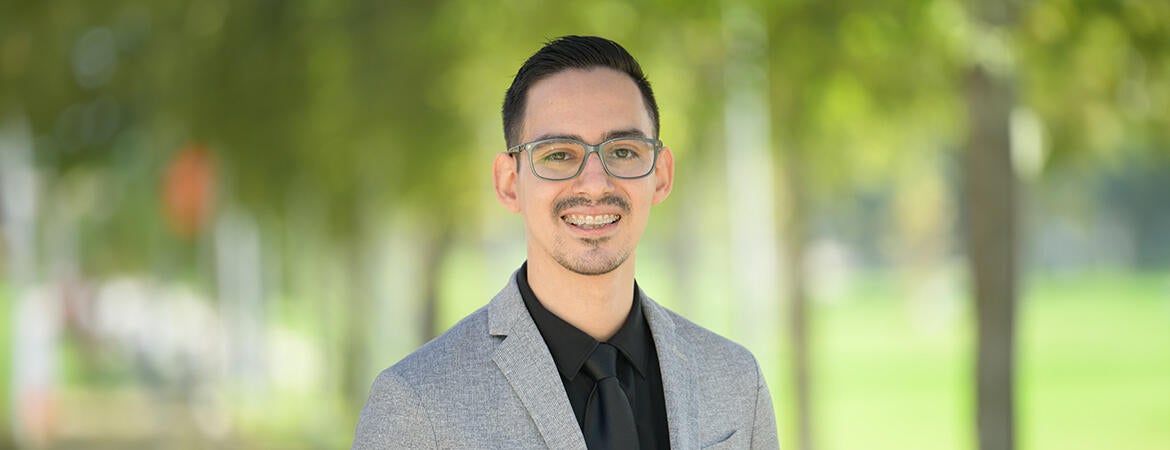
When California Gov. Gavin Newsom signed the Creative Economy Master Plan into law, it signaled a historic shift: the official recognition of the cultural sector as a primary pillar of the state’s economic future. But for second-year MBA student Dyami Ruiz-Martínez ’26 MBA, a signature on a document is only the beginning.
“State policy creates opportunity,” says Ruiz-Martínez, who is currently earning his master’s at UCR’s A. Gary Anderson Graduate School of Management. “But, without the infrastructure to support it, those opportunities don’t compound. That’s where business comes in—we understand what’s necessary for economic development to follow.”
Ruiz-Martínez’s role as a board member of Arts Connection—the Arts Council of San Bernardino County—and his leadership with the Inland Film Festival recently earned him a Certificate of Recognition from the California State Senate. Issued by Sen. Eloise Gómez Reyes, the award honors outstanding service and leadership in advancing arts, culture, and economic development across the Inland Empire.
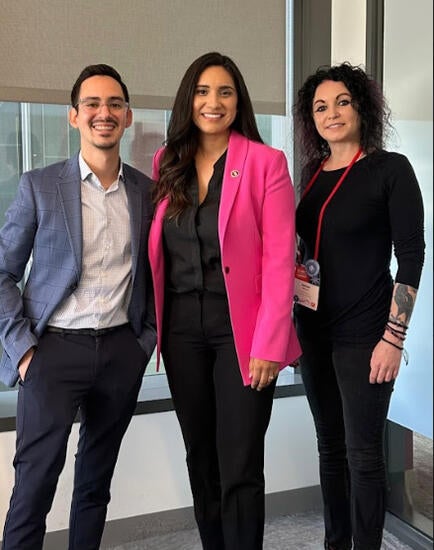
California Senator Sabrina Cervantes
Originally joining the Arts Council board to support artists and the creative community, Ruiz-Martínez’s contributions have expanded into implementation planning—helping align local organizations with statewide economic frameworks while maintaining financial discipline and long-term viability.
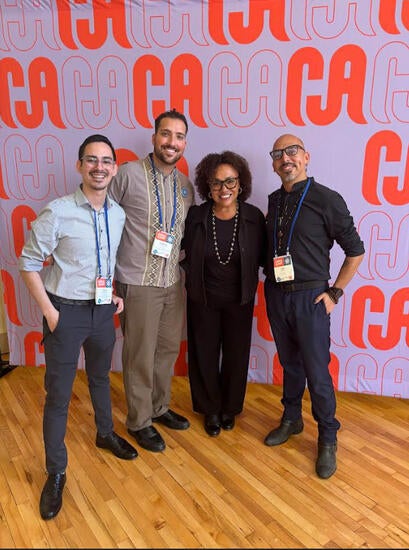
The Intersection of Anthropology and Finance
With an approach to business that is anything but traditional, Ruiz-Martínez’s professional identity is built on a cross-disciplinary foundation of anthropology, political science, and finance.
“My background in anthropology provides the cultural literacy to ensure that economic development is built with a community, rather than imposed upon it,” he says.
This human-centered perspective is balanced by “hard skills” in asset management and governance. A licensed real estate broker with seven years of industry experience, Ruiz-Martínez currently serves as the director of housing finance and partnerships at the Inland Equity Community Land Trust, where he works on shared-equity housing models, lender partnerships, and long-term affordability structures—applying what he is learning in the classroom to pressing regional challenges.
A Global Perspective at AGSM
Choosing UC Riverside for his MBA was a strategic move to sharpen his technical command of finance and strategic management. His time at the AGSM, or the A. Gary Anderson Graduate School of Management, has been marked by a global outlook, including participating in the school’s Oxford Intensive and immersive trips to Vietnam and China, where he explored how international markets integrate cultural heritage into
economic strategy.
Closer to home, Ruiz-Martínez remains a pillar of the UCR graduate community. He serves as the AGSM academic affairs officer for the Graduate Student Association and represents graduate voices on the UCR Academic Senate Education Policy Committee. These roles place him at the center of institutional decision-making, where he contributes to academic planning and governance while representing graduate student
interests.
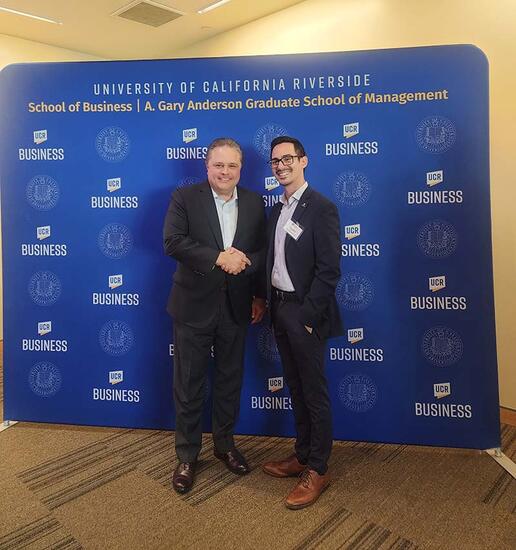
Jaime J. Merino scholarship for community service
Looking Toward a Sustainable Future
As he nears the completion of his MBA, Ruiz-Martínez remains focused on opportunities to apply his training across sectors. Whether in the creative economy, housing finance, nonprofit governance, or emerging public and private initiatives, his work reflects a consistent approach: creating value across organizations and communities. “My goal is to continue designing sustainable ecosystems where our workforce and creative communities have the stability they need to thrive and are backed by data-driven action,” he says.
For this Highlander, the “creative economy” isn’t just a policy term—it’s a blueprint for the future of the Inland Empire.