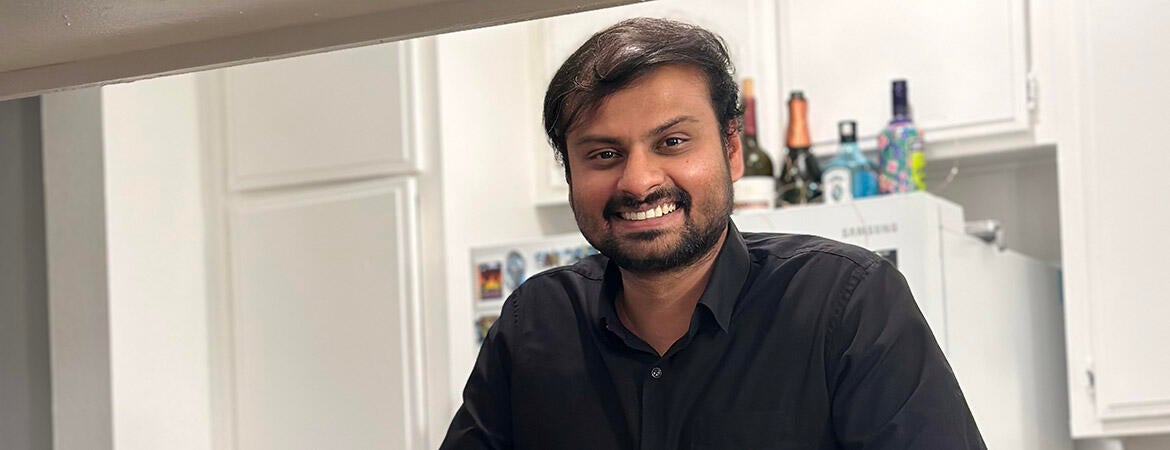
A current UCR MBA student concentrating in Business Analytics, Adru doesn’t just drink cocktails—he analyzes them. His new book, The Data Guide to Cocktails, is the culmination of a journey that began not behind a mahogany bar, but in the rigorous world of Mechatronics Engineering.
From Engineering to Mixology
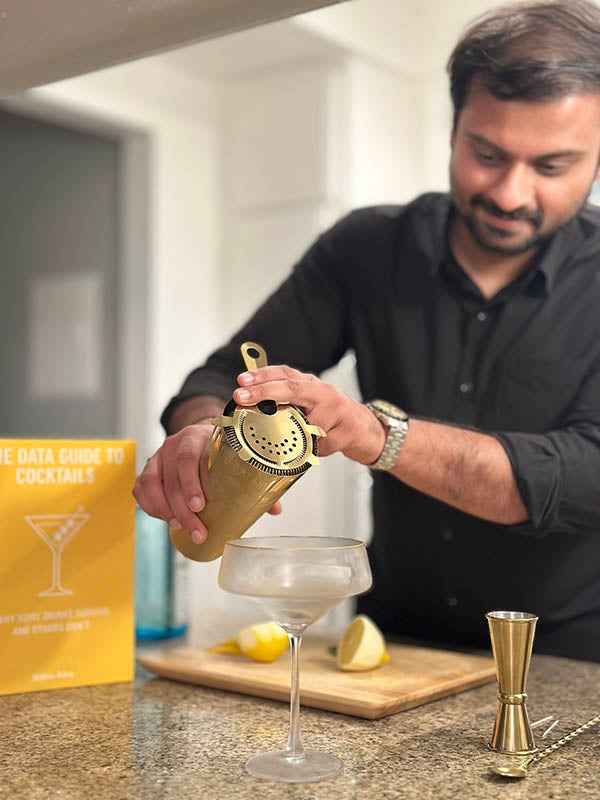
Adru’s background is rooted in technical precision. With an undergraduate degree in Mechatronics and a minor in Data Science, he spent years studying systems thinking and analytical problem-solving. When he arrived at UCR to pursue his MBA, he found an environment that encouraged him to apply that academic rigor to his personal passions.
"I chose UC Riverside for its strong focus on interdisciplinary learning," Adru says. "UCR has provided an environment where I can combine academic rigor with creative and independent exploration."
The Science of the Sip
The book grew naturally from Adru’s love for writing and data. Unlike beer or wine, which are often defined by their terroir or fermentation, Adru argues that cocktails offer more room for "intentional design."
"Small changes in ratios, ingredients, or technique can completely alter the experience," he explains. In The Data Guide to Cocktails, he treats classic drinks as experiments, using data-driven insights to understand how flavors and structures interact. While he hasn't bartended professionally, his "hands-on" experimentation with friends has allowed him to treat his kitchen like a laboratory.
Looking Ahead
As he nears graduation, Adru is looking to transition his skills into a career as a business analyst. He aims to apply the same data-driven insights he used in his book to solve real-world business problems. However, his journey into the world of spirits may just be beginning; he hopes to one day step behind a professional bar to see how his theories hold up in a fast-paced environment.
Whether he is optimizing a supply chain or a Whiskey Sour, Adru’s message is clear: data isn't just for spreadsheets—it’s a key to understanding the world, one drink at a time.